
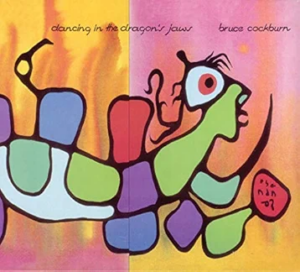
The 100 Greatest Albums in Christian Music — #42: Bruce Cockburn, Dancing In The Dragon’s Jaws (1979)
Mystic folk-rock with guitar fire—poetic lyrics, intricate playing, and a restless spiritual hunger at the center of it all.
Intro
Appearing at #42 in The 100 Greatest Albums in Christian Music, Bruce Cockburn’s Dancing In The Dragon’s Jaws (1979) stands as a landmark in spiritually charged folk-rock. It’s an album where dazzling guitar work, vivid imagery, and quiet prayerfulness live side by side.
The Album in Context
By the late 1970s, Cockburn had already built a reputation as a thoughtful songwriter, but this record marked a turning point in both his spiritual and artistic trajectory. The songs lean more overtly toward questions of faith, transcendence, and hope, while retaining the observational detail that defined his earlier work.
Musically, the album is built around intricate acoustic guitar lines, subtle percussion, and arrangements that favor space over spectacle. The production invites listeners into a contemplative headspace, where each chord change and lyrical image feels carefully placed.
Within the broader faith-and-art conversation, Dancing In The Dragon’s Jaws became a touchstone for Christian-adjacent songwriters who longed for depth, nuance, and poetic honesty. It quietly expanded the definition of what “Christian music” could sound like long before there was a formal industry category for it.
Standout Songs
- “Wondering Where the Lions Are” — A surprise hit single whose buoyant groove carries a meditation on fear, providence, and joy in the face of uncertainty.
- “In the Falling Dark” — A richly layered reflection on God’s presence in the shadows, anchored by some of Cockburn’s most evocative guitar work.
- “After the Rain” — A gentle, hymn-like piece that frames renewal and grace in images of weather, light, and quiet transformation.
Why It Matters
Artistically, the album is a masterclass in restraint and detail. Cockburn’s playing is virtuosic without ever feeling showy, and his lyrics reward close listening with layers of meaning that unfold over time.
Historically, it offered a model for faith-informed songwriting that honored doubt, wonder, and mystery instead of rushing to easy answers. Generations of Christian and crossover artists have traced a line back to its influence.
What’s Next
Tomorrow on The 100 Greatest Albums in Christian Music countdown, we continue with #41 — U2, October (1981). Don’t miss the companion podcast episode of The CCM Professor with Greg Rice, where we explore the stories and spiritual threads woven through these albums.
Soli Deo Gloria!
This post is part of the series The 100 Greatest Albums in Christian Music, celebrating the artists and recordings that defined a generation of faith-filled creativity.
As an Amazon Associate, CCM Professor may earn from qualifying purchases through affiliate links. Your support helps keep this series going!
Album Details
| Artist: | Bruce Cockburn |
| Album: | Dancing In The Dragon’s Jaws |
| Year Released: | 1979 |
| Record Label(s): | True North/ Millennium |
| Producer(s): | Eugene Martynec |
Previous Post in the series:
#43: Point Of Grace – Life, Love, And Other Mysteries (1996)
Next in the series:
#41: U2 – October (1981)
Listen to “Dancing In The Dragon’s Jaws” on Spotify
You can listen below or click here to purchase the entire album.
Bruce Cockburn: Dancing In The Dragon’s Jaws is available from Amazon to purchase the whole album.
(affiliate link – a way to support our platform at no extra cost to you!)